


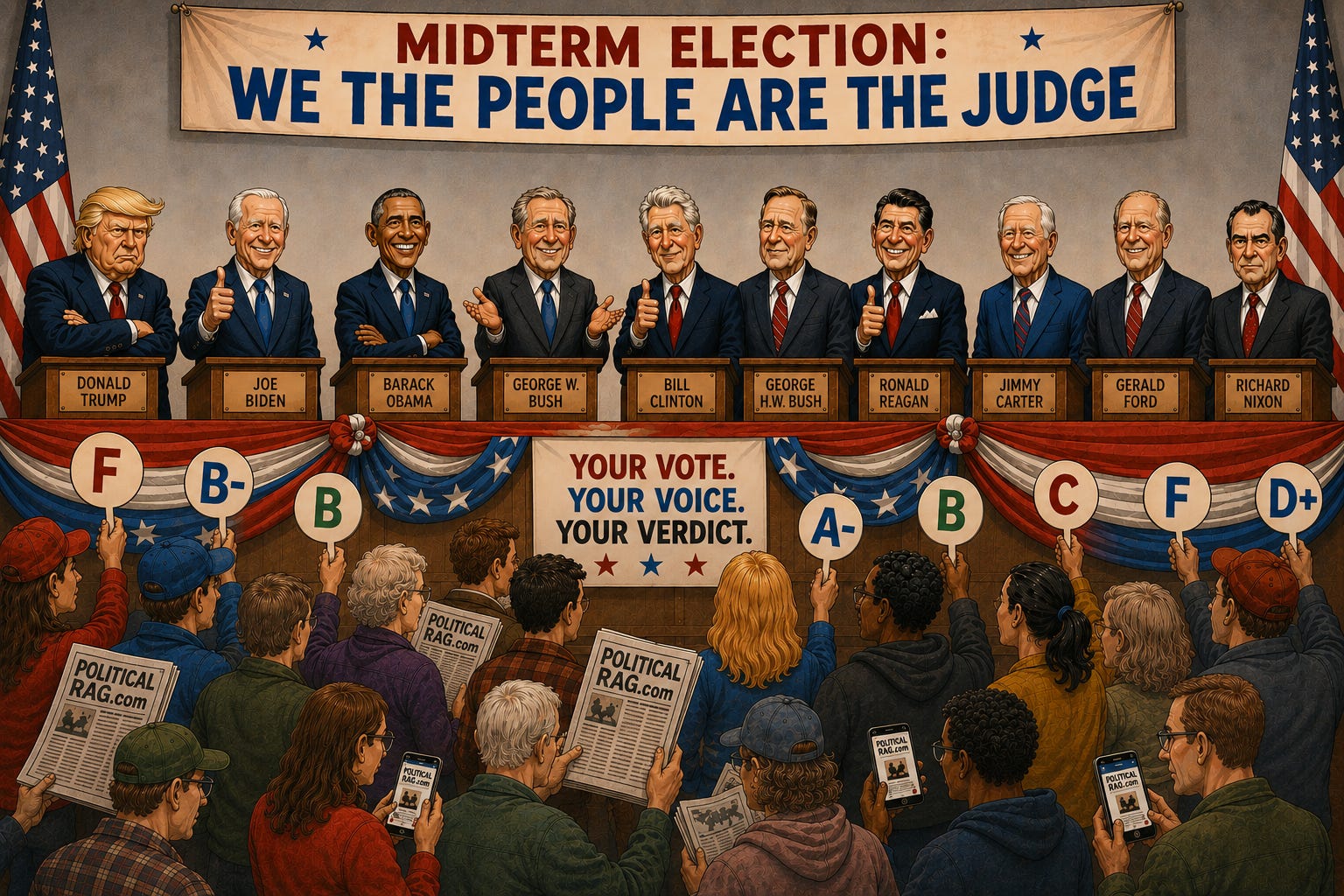
The single biggest predictor of the outcome of the U.S. House majority in a midterm election is, and for a long time has been, the incumbent president’s approval rating. Period.
Yes, there are issues that are considered: the economy, jobs, inflation, war, or backlash to certain policy. These are the most typical. Sometimes voters just get tired of what they’ve had for several years and are looking to make a change. But every time, voters are looking as these issues through the lens of the sitting president, and how they feel he is doing in his management of them. It is their only opportunity on a nationwide scale to give the president a score on a report card before he either is up for re-election or is termed out of office.
Let’s take a look at the last fourteen midterm elections (1970-2022) to break this down.
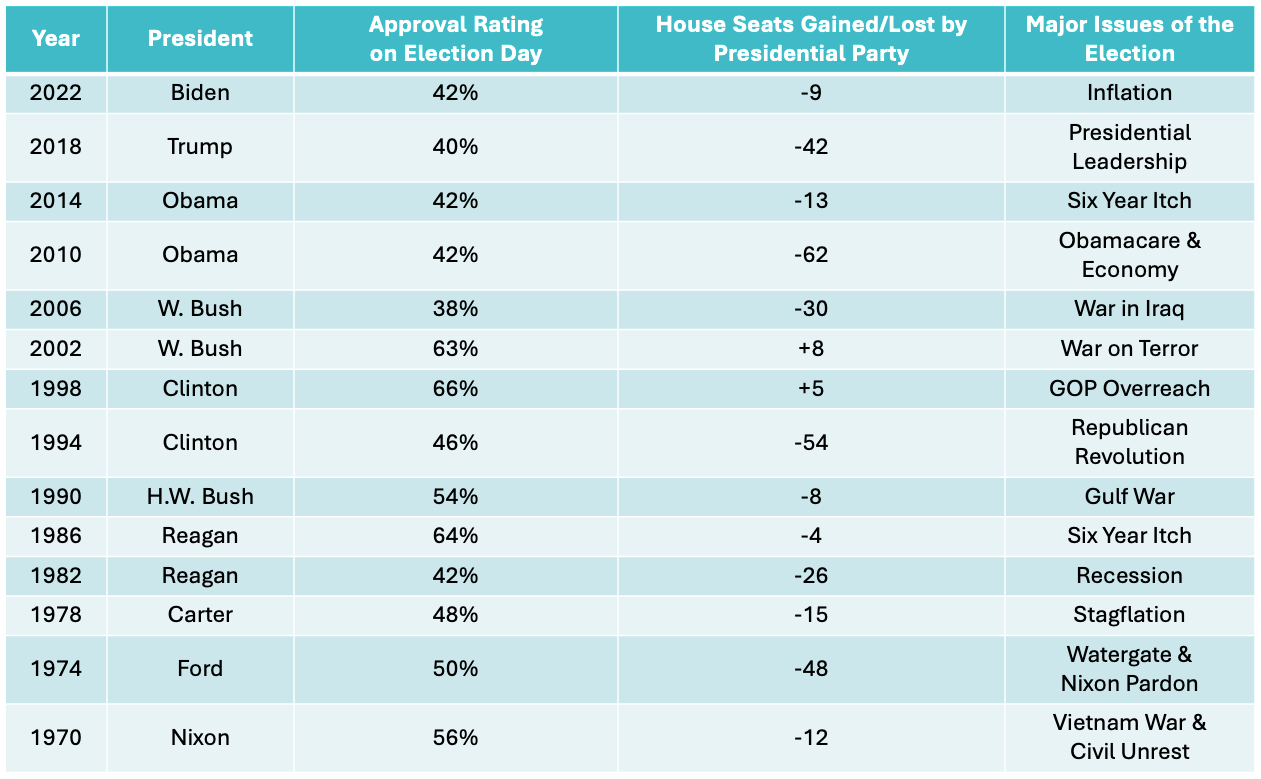
The first thing to notice is that in 12 of the last 14 midterm elections the president’s party lost seats in the House. The two times that the president’s party didn’t lose House seats was in 1998 and 2002. In the former, President Clinton was riding a high wave of popular support against what many voters saw as overreach by Republicans in Congress related to the president’s misconduct over his affair with Monica Lewinsky. In 2002, President George W. Bush was also riding a high wave of popularity due to his leadership in the War on Terror, post-9/11.
But popularity alone isn’t enough to save the president’s party in the House. The circumstances of the moment helped both Clinton and George W. Bush. But it wasn’t enough to help George H.W. Bush in 1990, Ronald Reagan in 1986, or Richard Nixon in 1970 — each of whom had a majority percentage approval rating, and a large one in the case of Reagan’s 64% in 1986.
Why is this?
Usually it comes down to the incumbent party, to borrow a phrase from President Trump, growing tired of winning. The party that just lost the White House two years prior is licking its wounds and itching for a fight while the in-party gets a little complacent. The out-party has an easier time of turning out its base and midterms are generally driven by which party turns out its core supporters better, as overall turnout decreases from presidential election years.
Even super high popular approval, like Reagan’s 64% in 1986, doesn’t always help because voters get the “six year itch.” If a president is in his second term, voters generally start to grow weary of the shtick and are ready to turn the page to a new generation, fresh blood, different ideas, etc. That’s hard for any president’s advisors or party stalwarts to ever admit, but it’s the truth.
What happens then if the president is underwater in his approval rating on Election Day?
Be prepared for his party to lose seats in the House. Every time. There has never been an instance of a president underwater in his approval rating (going all the way back to the 1930’s and the advent of the polling industry) and his party gaining House seats in a midterm election.
Does that mean that the president’s party loses their majority and control of the House? Not if they had a huge majority to begin with, but that hasn’t happened since 1978 when Democrats had 292 seats already and losing 15 seats put them nowhere near in danger of dropping below the 218 needed for a majority.
In 2026, the question for Republicans is not if they will lose seats, but how many? President Trump sits below a 40% approval rating. He’s losing support among every major demographic group as I detail in this 2026 Essential: Trump’s Approval. He’s also underwater on his leadership of key issues, which I cover in this 2026 Essential: Trump’s Leadership on Issues. Republicans also hold just a 2-seat majority in the House at 220, meaning just a light breeze is likely to knock them into the minority. Even with all the tinkering with mid-decade redistricting, Democrats are still on track to gain the House with a minimum 4-seat majority. I know because I did the math here: Can redistricting save Republicans?
