

Welcome to September! We’re in the ber months, which means summer is over, vacations are done, kids are back in school, and in my house Hocus Pocus will be streamed approximately 537 times until Halloween. But crucially, the midterms enter a new phase: execution.
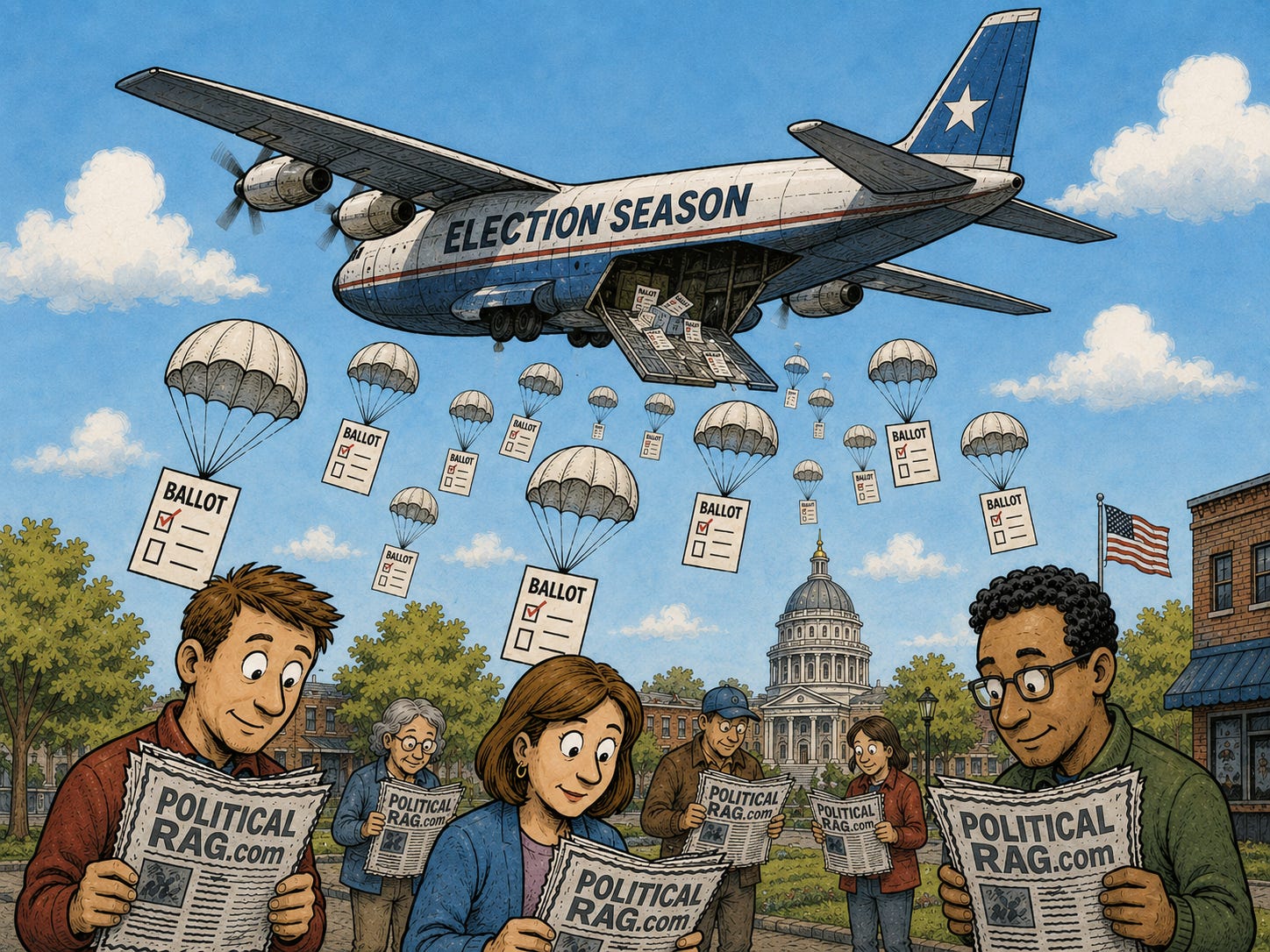
Over the last several months the focus has been on the theoretical – what could happen in the election by examining polling and historical trends. But now we move into what is happening. Because voters don’t decide in 63 days on November 3. They are going to start receiving ballots in three days.
North Carolina leads all states with absentee ballots being mailed to voters on September 4. Nineteen states and the District of Columbia, in all, begin voting in September through a combination of absentee, no excuse mail balloting, and early in-person voting (AL, DC, ID, IL, MD, MI, MN, MS, NE, NH, NJ, NY, NC, ND, OK, RI, SD, VA, VT, WI). That’s over 69 million registered voters, more than 30% of all registered voters in the U.S., who will soon be able to begin voting. Some of those states are playing host to hotly contested races that could decide control of Congress.
So, with that in mind, let’s level-set about what is driving voters as ballots start to circulate.
As I’ve previously written, one of the most important indicators of what direction the country will head in a midterm election is the approval rating of the sitting President of the United States. And as the ballots become available, that’s bad news for Republicans.
President Trump currently sits at a 38% approval rating nationwide. His approval rating with independents hovers around an anemic 21-26%, depending on the poll. His approval rating with Republicans stands at 80%, which yes, is solid. But consider that President Biden had an 85% approval rating with Democrats just after Election Day in the 2022 Midterms. That 80% approval rating is also 7 points lower than where it was at this time during the 2018 Midterms in Trump’s first term.
State-by-state, the president is underwater in his approval ratings with likely voters in 40 states. None of the ten states where he is still in a positive range were swing states in 2024. In the seven swing states of 2024 (AZ, GA, MI, NC, NV, PA, WI), all of which Trump carried, his approval rating is underwater by an average 14 points. Georgia, Michigan, and North Carolina all host marquee Senate races. Even solidly red states such as Alaska, Iowa, Ohio, and Texas all give Trump low approval ratings now. Each state hosts a hotly contested Senate race.
What’s driving these trends? The same thing that has been the dominant issue since the post-Covid inflation run-up – costs. The single largest issue that defined Biden/Harris’s re-election challenge. And likely the single biggest issue that is on track to swing back against Republicans in November.
Trump’s policies are not helping Republicans’ cause here either. He has a staggering 70% disapproval rating on his handling of inflation yet continues to drive economic policies that most Americans believe are making costs worse – tariffs and the War in Iran. 61% of Americans believe Trump’s policies are making inflation worse, up from 45% after winning a second term in 2024. Support for the war with Iran has only grown by 1.5% since it began, with 35.1% of Americans supporting military action in the beginning and 36.6% supporting it today. Opposition has grown from 47% to 55%. Either issue would be politically consequential on its own. Together they create a strong headwind for any incumbent party.
Polling has consistently shown that costs, inflation, and the economy generally remain voters’ top concerns. New August polling has found that the war with Iran is now entering Americans’ minds as a more pressing concern, being listed as the third most important issue behind costs and economy. Voters trust Democrats on handling each of these more than they do Republicans.
Taking these factors into account, with ballots beginning to arrive in voters’ hands in just a couple days, the window for persuading voters is rapidly closing. To stave off a Democratic wave election, Republicans’ best bet may be switching to a turnout operation among the most loyal of Republican voters.
But will they turn out?
A significant enthusiasm gap currently exists between Democrats and Republicans, with the former holding an 11-point edge among their core base being motivated to vote. This is consistent for any “out” party in a midterm year. But such a gap can be devastating.
Looking at the 2025 gubernatorial election in Virginia, where Democrat Abigail Spanberger won a 15-point landslide, offers a useful illustration about why enthusiasm and turnout matter. That year, rural counties that normally support Republican in the Old Dominion shifted by an average 12 points towards Democrats, helped by a 14-point drop in Republican turnout versus 2021 when Republican Glenn Youngkin won the governor’s mansion. In the major metropolitan areas of Virginia, Republican turnout dropped by an even larger 20 points. Democrats meanwhile experienced a 19-point and 17-point surge in turnout in each respective area compared to 2021. And what was the driving issue of the election? The economy. And economy-focused voters favored Spanberger by a 27-point margin. Overall voter turnout in both 2021 and 2025 was about 55%.
This might explain the midterm convention the GOP is hosting in Dallas this month, coinciding with the start of early voting, that the RNC promises will be a “primetime showcase for President Trump’s success.” Party conventions often do little to sway the persuadable voters. This will be, above all, an effort to juice Republican enthusiasm. But a midterm convention is unlikely to generate the kind of primetime attention that the typical presidential convention receives – let alone one that will interfere with the start of the NFL season. As I routinely tell candidates, don’t mess with voters’ football viewing habits. We may be a nation founded on the freedom of religion, but our joint houses of worship can be found inside football stadiums. If an independent or unenthused Republican has a choice between a premier NFL game on TV and an unpopular president pushing policies already deemed unpopular by most Americans, it remains to be seen whether this event will hit the mark.
© 2026 Center Field Strategies LLC | Political Rag is an imprint of Center Field Strategies