

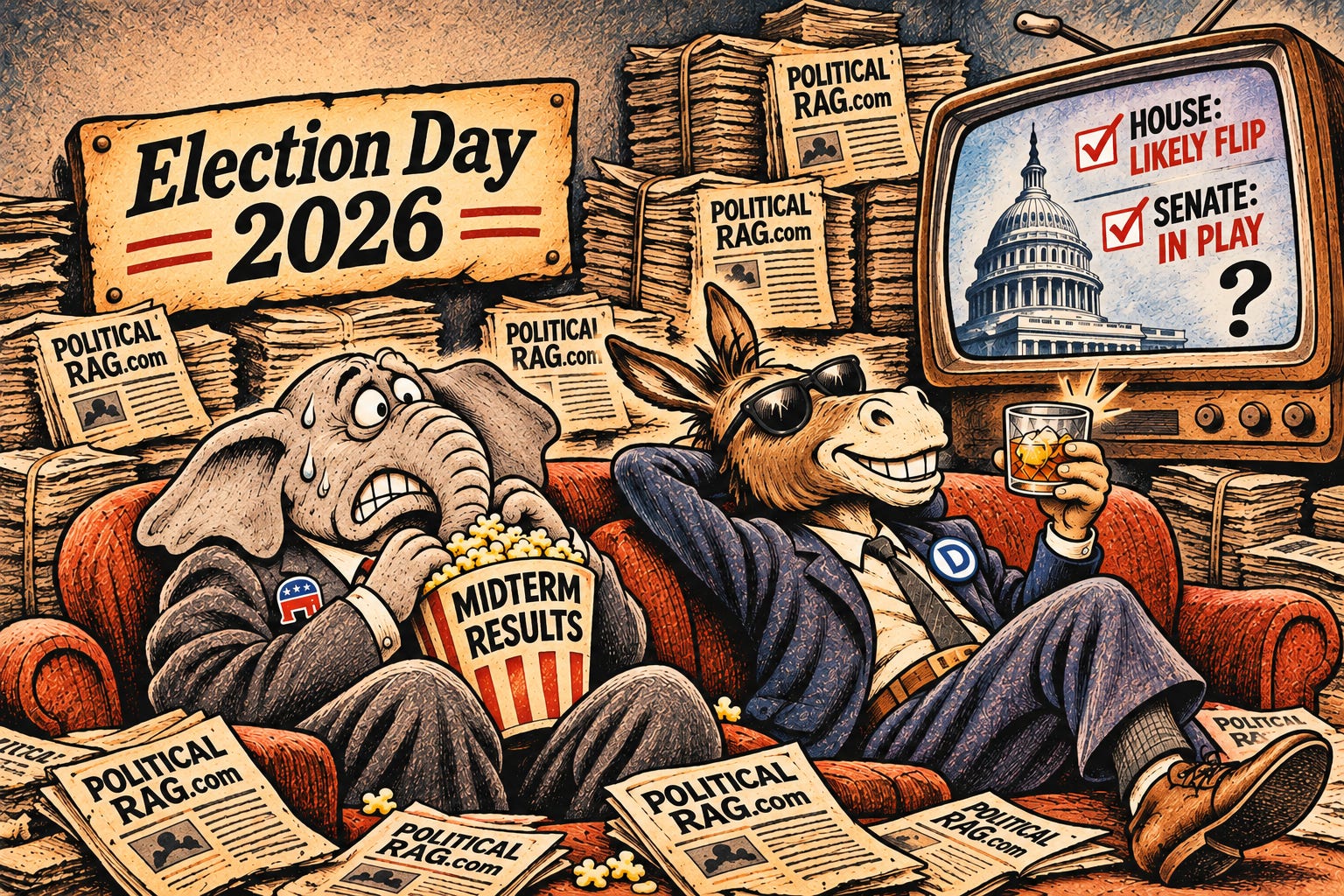
Congratulations! If you’re reading this, you made it to the end of the new reality show Midterms 2026, a spinoff of the hit show Elections. Is your sanity (mostly) in check? Well, great news, now comes the harrowing rose ceremony – polls closing, ballots being counted, and jumping at the television every time they say “BREAKING UPDATE!”
So, with just hours to go before polls close on this election cycle (and the 2028 presidential election immediately begins), where do things stand? On the precipice for Republicans. There’s just no way to sugarcoat it – the GOP is likely in for a rough night.
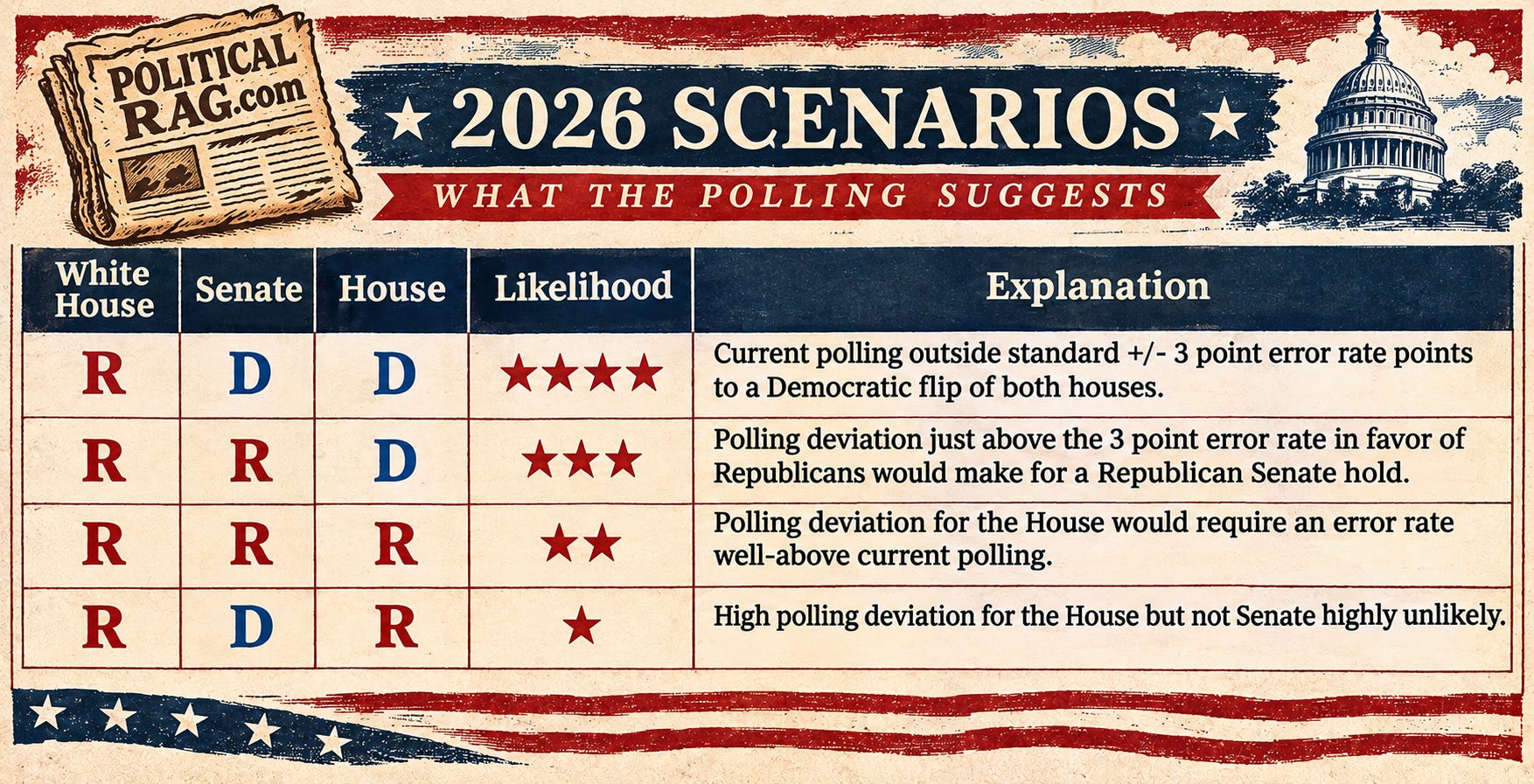
Midterms historically are rough for the party in power, even when the sitting president is popular. And just how popular is President Trump? Less than 40% of Americans approve of his job as president, lower than 2018 in his first term when Democrats swept the House.
But it is not just the president who is unpopular. In some of the most competitive Senate races in otherwise red states, the Republican nominees are even more unpopular than Trump. In the competitive states where Republicans have quality candidates, the races are within the margin of error, highlighting the tough environment the GOP faces due to strong inflationary headwinds which most voters place at the feet of the president and the Congressional majority.
On the House side, the generic ballot shows nearly a 9-point Democratic advantage, almost a full point above the final polling in 2018 when Democrats flipped 41 seats and took the majority. This lead is not just happening in blue states or swing states. Every state has shifted left, relative to its 2024 presidential margin, by an average of 9.5 points. So, we are looking at a near certainty the House will flip Democratic. By how much? There’s only so much to gain because Democrats need to flip just 4 seats for a majority. So, Democrats could pick up just 21 seats and match the same 235 they held after the 2018 midterms. The competitive map has expanded though, so anything above a 26-seat flip would represent a harder shift against Republicans in redder districts.
The House, of course, feels like a foregone conclusion, because it basically is. What everyone wants to know about is the Senate. So, what are we looking at? The most likely outcome points to a Democratic flip.
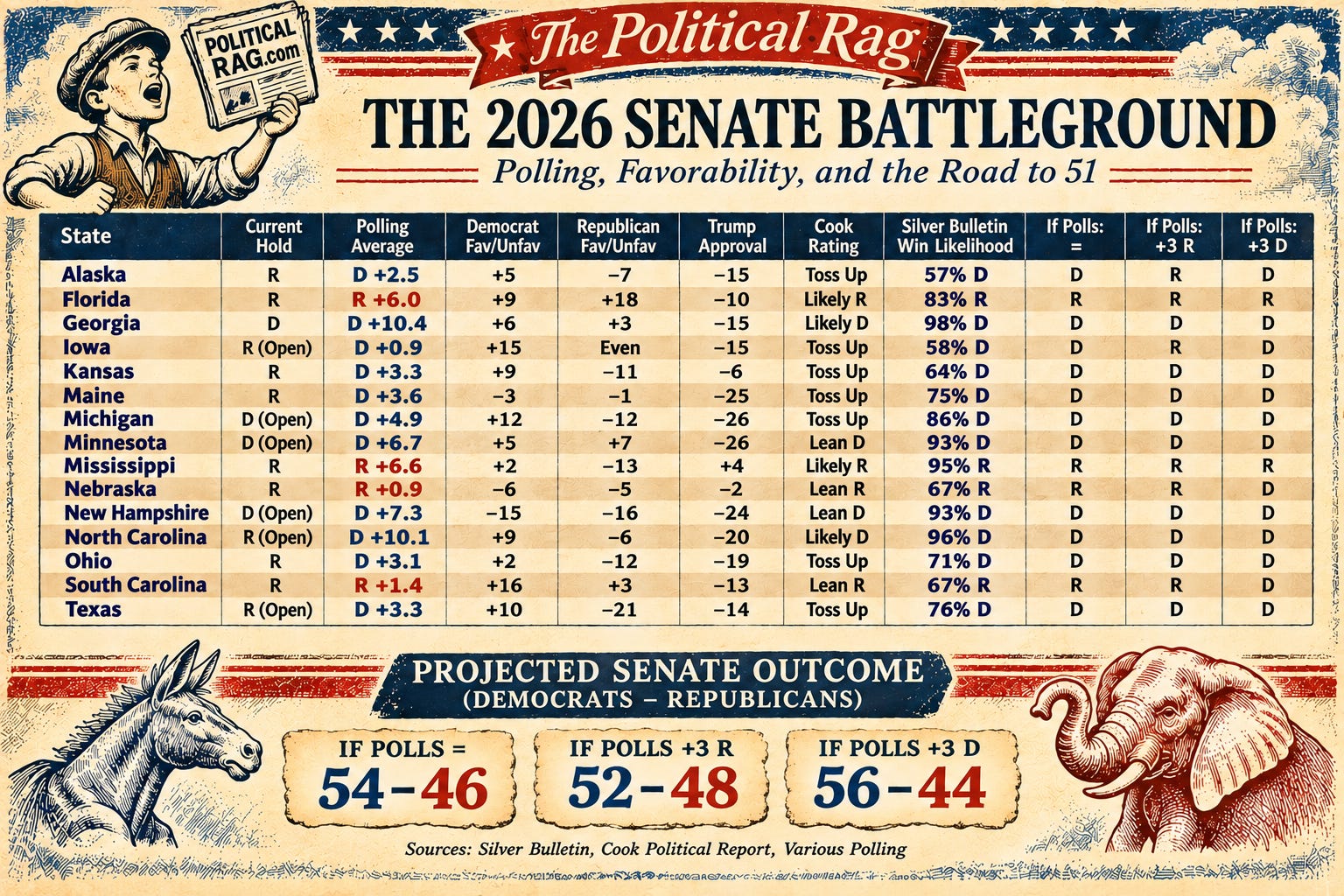
Polling averages show Democrats leading in the most competitive races. If polls are correct, Democrats will net enough wins for a 54-seat majority. If polls are off by the standard 3-point margin of error in favor of Republicans, a slim Democratic majority is still likely. If polls underestimate Democrats, then they could flip as many as nine seats.
Republicans’ best bet is to hope for a polling error wider than average. Is that possible? For sure. But it also assumes an across-the-board polling error in every state, which is less likely. Democrats meanwhile need to just perform as well as polls show, even slightly under, and they’d still be on track to take the Senate. If Democrats are underestimated by polls? Then they’re on their way to the largest Senate majority of either party since the 2008 elections when Democrats walked away with 57 seats.
Not only are Republicans attempting to hold onto their majority, they’d also be defying 150+ years of history.
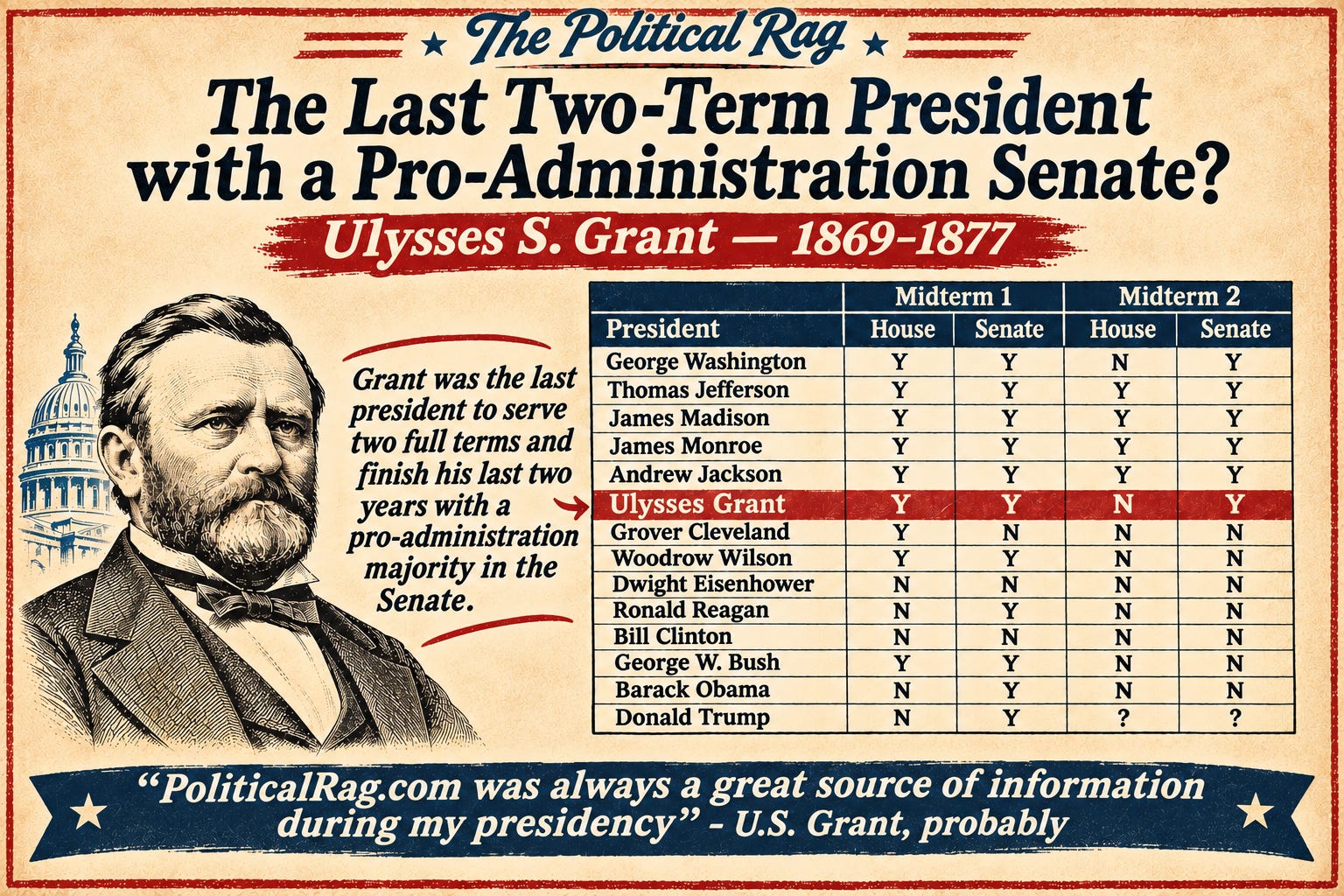
Should the Republicans hang on to the Senate this year, it would be the first midterm in 152 years in which the president’s party, or the “pro-administration” party (as it was called in the early days of the republic, beginning with the politically unaffiliated George Washington) held the Senate for the final two years of a full two-term presidency. (H/T to friend & subscriber Jay F. in Nebraska who tried to stump me with this bit of trivia. But after a moment’s thinking out loud, I landed the answer. Because PoliticalRag.com is election nerd HQ.)
What’s driving the strong position for Democrats in both houses of Congress? Beyond the anemic approval rating for the president, even in the reddest of states, it’s how Americans feel about the issues being handled. This will, without a doubt, be an economy election. A plurality of voters select cost of living and inflationary pressures as their top issue. By a 9-point margin, Americans trust Democrats more than Republicans to handle the economy. By a wider 13-point margin, Democrats are preferred to address the high price of gasoline.
Creeping up quickly, however, as a significant second-place issue of concern is corruption in government. A recent Harris Poll found corruption to be the second-highest concern, with 9-in-10 Americans believing corruption in the government to be a major issue. 76% believe federal officials care more about enriching themselves than improving the economy for ordinary Americans. The problem is especially acute for Congressional Republicans, as 40% of respondents, including 29% of Republicans, said the GOP under President Trump has a bigger corruption problem than Democrats. 32% said both parties have a corruption problem, while 21% said Democrats have the bigger problem.
All signs point to a Democratic sweep of Congress. Does that make Democrats the more popular party? Hardly. As a national brand, they’re badly damaged. Most voters see their votes as a check on Trump, rather than an endorsement of Democrats. 58% of Americans believe it is important to elect a new Congress that will serve as a check on Trump, versus just 25% who want a legislature that will advance the president’s agenda. Since the pendulum only swings two ways, Democrats benefit. But if Democrats are handed power again, just two years after voters rejected them wholesale, then they have a lot to deliver on to repair their brand.
From Political Rag – Happy Election Day! Thank you for reading and stay tuned for the post-election analysis to come. Go vote, then grab your favorite drink to watch the returns. I have a Glenlivet Caribbean Reserve single malt scotch set aside for tonight. And remember, in a democracy we deserve the government we get.
© 2026 Center Field Strategies LLC | Political Rag is an imprint of Center Field Strategies